
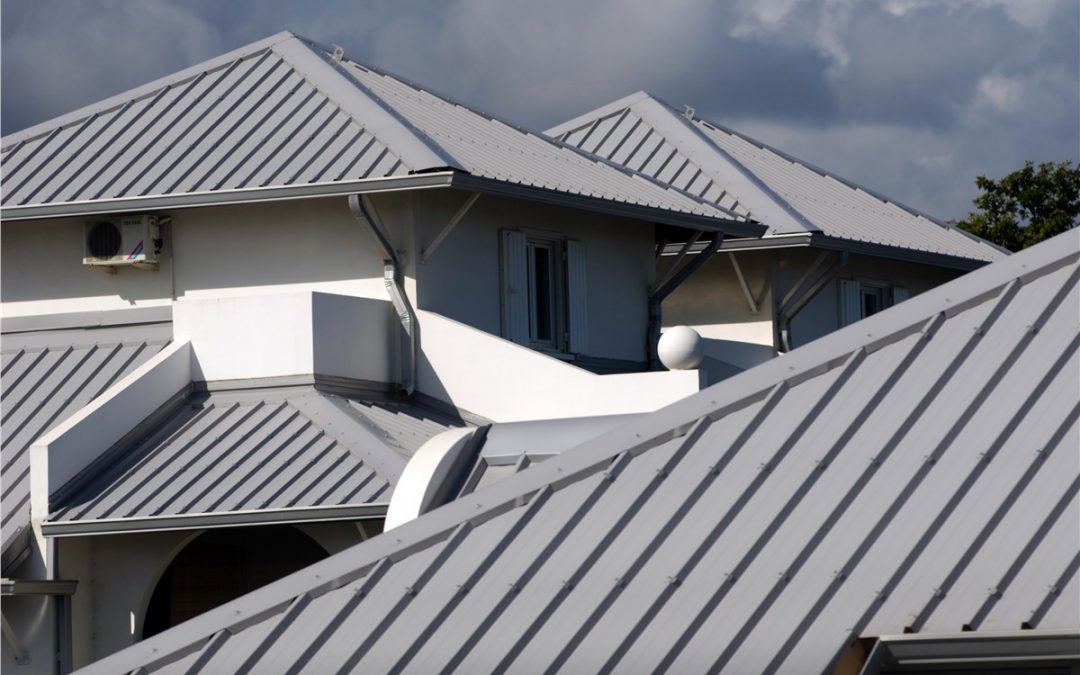
Are Metal Roofs Noisy or Hot? Debunking the 5 Biggest Metal Roofing Myths in Greensboro, NC
Despite the surging popularity of metal roofing across North Carolina, many homeowners still hesitate due to outdated misconceptions—often picturing an uninsulated tin barn roof during a summer rainstorm. Modern residential metal roofing systems have evolved dramatically over the past two decades.
If you are weighing a metal roof for your home in Greensboro, High Point, or Kernersville, let’s separate fact from fiction by debunking the five most common myths about metal roofing.
Myth #1: “A Metal Roof Will Be Deafening Every Time It Rains”
The Reality: When installed over a residential home, a metal roof is no louder than an asphalt shingle roof.
Unlike an open-rafter barn where rain hits bare sheet metal directly, a residential metal roof is installed over solid plywood or OSB roof decking, a thick layer of synthetic waterproof underlayment, and an insulated attic space. Together, these layers absorb acoustic vibration. Inside your home, a Greensboro thunderstorm sounds like a soft, muffled patter—identical to what you hear under shingles.
Myth #2: “Metal Absorbs Heat and Makes Your House Hotter in Summer”
The Reality: Metal actually keeps your home cooler during humid Piedmont summers.
Asphalt shingles are dark, petroleum-based products that absorb and trap solar heat all day long, radiating that heat into your attic well into the evening. By contrast, modern steel roofs feature cool-roof reflective pigments (such as Kynar 500® finishes) that reflect up to 70% of the sun’s infrared rays. Furthermore, metal has very low thermal mass—meaning the moment the sun sets, the roof cools down immediately. Homeowners routinely report 10% to 25% savings on summer air conditioning costs.
Myth #3: “Metal Roofs Attract Lightning”
The Reality: Metal does not attract lightning—and it is actually the safest roof to have if lightning strikes.
Lightning is drawn to the highest conductive path in a given area, such as tall pine trees or utility poles, not the material on your roof. In the rare event that lightning does strike a home, a metal roof disperses the electrical charge safely across its surface and—because metal carries a Class A non-combustible fire rating—it will never ignite into flames like wood shake or asphalt shingles can.
Myth #4: “You Can’t Walk on a Metal Roof Without Denting It”
The Reality: Properly installed residential metal panels can be walked on safely without damage.
High-quality 24-gauge and 26-gauge structural steel panels installed over solid decking are engineered to support foot traffic for routine maintenance like cleaning gutters or inspecting chimneys. (As with any roof, stepping on the flat areas between seams or ribs—rather than crushing the raised vertical seams—preserves the panels cleanly.)
Myth #5: “Metal Roofs Rust Quickly in North Carolina’s Humidity”
The Reality: Modern residential steel roofs are engineered specifically to prevent rust for 50+ years.
Today’s metal roofing panels are coated in Galvalume®—a specialized metallurgical alloy of aluminum, zinc, and silicon bonded to the steel core—and finished with baked-on fluoropolymer paint systems. Even in humid climates like Greensboro, Galvalume® resists corrosion, salt air, and black algae streaking (those unsightly dark streaks caused by Gloeocapsa magma bacteria on shingle roofs).
Experience the Difference With Triad Installations
When you work with Triad Installations, you work directly with seasoned craftsmen—never inexperienced laborers or unvetted subcontractors. Every technician on our crew has 15+ years of training, and we stand behind every roof with a 5-year workmanship warranty and a 48-hour service appointment guarantee.
- Company: Triad Installations
- Phone: (336) 854-5706
- Website: https://triadinstallations.com/services/roofing/
Recent Comments